Weighing food can require a bit of a learning curve, we get that, so we want to help make it as easy as possible. One of the biggest road blocks for most people is whether they should weigh food raw vs cooked. This NutriWiki will give you the skinny on this conundrum. Weighing is the most accurate way to determine calorie and macronutrient content of a food. However, we are commonly asked whether food should be weighed raw or cooked. The best answer is raw. People like their steaks cooked different ways. However, the amount of cooking generally doesn’t change the calorie or nutrient content of the meat itself; two steaks of the same weight will have roughly the same nutrient profile, even if one is left raw and the other is cooked well done.
However, anyone who has cooked meat before knows that it loses juices as you cook it. How much is lost depends on the cooking method and how long it’s cooked for, but it’s safe to assume all forms of cooking cause the meat to lose at least some moisture. Note that what’s leaving the steak is mostly water - although some fat and such cooks out, the majority of the macronutrients remain intact. This is the main reason why raw is the most accurate method. No matter how the meat is cooked, or how much its weight changes, we know the macros are going to be the same. The amount of error this adds to your tracking varies, but can accumulate considerably over the span of several cooked meals. Overall, having to guess at the macros of a cooked food every now and again isn’t likely to be an issue. It would be wise to limit it whenever possible in order to be as consistent and accurate as possible, though.
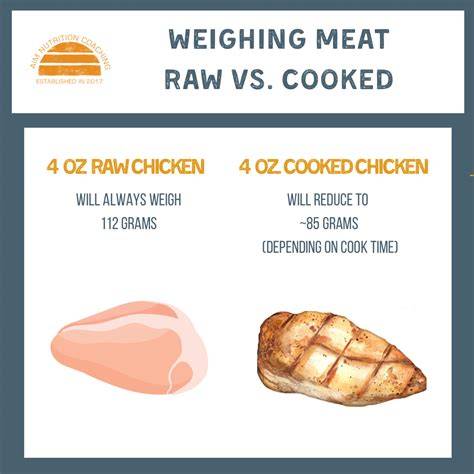
One exception to this rule regards packaged food which lists the nutrition facts in its cooked state. While this is less common than listing them unprepared, in these cases, the cooked values should be used. Let’s take a 225g (approx 1/2lb) cut of tenderloin steak, boneless, and trimmed to 0″ fat. Now, say we cook that steak until about 50g of water leaves it. If we give it to someone and ask them to estimate the calories and macros of it, they have no idea how much water cooked out of it. While 70 calories in of itself isn’t a night and day difference, these inaccuracies can add up to hundreds of missed calories in a week or even a given day.
Weighing and tracking food can seem a bit overwhelming at first. It takes some time to build the habit of weighing and entering items. It additionally requires diligence to ensure that the food is indeed the correct nutritional representation of both amount and type within the selected tracking system. A common source of error is the weight difference between raw and cooked food. Raw vs. cooked food measurement error can lead to under-reporting or over-reporting energy intake versus actual intake. The impact can be significant - several hundred calories per day or more - if the same incorrect entry is repeated in frequently. Raw vs. Measurement of uncooked food is more precise and eliminates the risk of variance related to cooking procedures. That said, sometimes it’s more practical to weigh cooked. Here are a few practical rules of thumb to convert between them.
Praktické pravidlá a konverzie medzi surovým a vareným
- Whether broiled, baked, or sautéed, animal meat loses approximately 25% of its mass when cooked. As meat cooks, water is driven off (same applies for baked potato!). Only water is lost; the caloric and macronutrient values do not change despite the change in scale weight. Therefore 113 g/4 oz raw meat is NOT equal to 113 g/4 oz cooked from a calorie or macronutrient perspective because water has been eliminated in cooking.
- Knowing the cooked weight, it’s possible to back-calculate the raw weight equivalent by dividing the cooked weight by 0.75. This accounts for 25% water loss. It also works in the reverse. This is handy as an estimation for dining out. For example, if entrée had ~4 oz cooked chicken, you’d input 5.3 oz raw chicken for a correct entry.
- Cooking time and volume of water vary between foods, but the following multipliers are a reasonable estimate to account for water gain. It’s the exact opposite circumstance as meat, the scale weight increases for the same calories and macros due to water weight.
Konkrétne príklady a číselné údaje
- Kuracie mäso: surové 100 g bez kože ~106 kcal, varená 134 kcal, dusená 141 kcal, grilovaná 151 kcal, pečená 165 kcal, restovaná 184 kcal na 100 g. Dôvodom je koncentrácia živín po strate vody a potenciálne pridaný tuk pri restovaní.
- Morčacie mäso: surové aj kuracie prsia sú porovnateľné v kalóriách; u iných častí to môže byť tukovejšie. Teľacie 138 kcal, králičie 173 kcal na 100 g.
- Ryža a ďalšie prílohy: surová vs varená. Varená ryža má podstatne nižšiu kalorickú hustotu na 100 g, pretože absorbuje vodu. Príklad: kilo surového mäsa sa zvarí na 750 g vareného; ryža zväčšuje objem až niekoľkokrát; zemiaky a batáty strácajú objem pri pečení.
Konverzný lavicový prepočet a praktické tabuľky
Konverzný faktor: ak viete, že určité jedlo stratí 25% hmotnosti, môžete vypočítať späť na surový ekvivalent alebo na varený ekvivalent. Napríklad 4 oz varenej kuracej prsia zodpovedá približne 5,3 oz surového kuracieho mäsa. Kalórie zostávajú rovnaké, len hustota kalórií na gram sa mení.
Rozdiely medzi špecifikáciou v databázach: USDA a MyFitnessPal často uvádzajú surové hodnoty ako základné; pri zázname sa riaďte jednotným stavom (surový alebo varený) pre konkrétnu potravinu, aby ste predišli chybám v denníku príjmu.
Ako správne zaradiť mäso do zdravej stravy
- Vyberať kvalitné a čerstvé suroviny; uprednostňovať spôsoby prípravy, ktoré zachovávajú živiny (dusené, pečené, grilované).
- Vyhýbať sa nadmernému množstvu soli a umelých prísad; preferovať chudé kusy mäsa a obmedziť spracované mäso (klobásy, párky).
- Pri sledovaní príjmu kalórií a živín si uvedomovať, že tepelná úprava ovplyvňuje hodnoty; najpresnejšie je vážiť surové mäso a používať tieto hodnoty v databáze.
Nutričné hodnoty a porovnanie typov mäsa
Núdzové prehľady ukazujú, že:
- Biele mäso: kuracie, morčacie - nízky obsah tuku, vysoký obsah bielkovín; selén a vitamíny skupiny B prispievajú k metabolizmu.
- Červené mäso: hovädzie, bravčové, jahňacie - vyšší obsah bielkovín a železa; dôležité sledovať spotrebu tukov, najmä nasýtených.
- Bravčové mäso: rozdielne časti, panenka je najchudšia, krkovička tučnejšia; porovnanie častí na 100 g ukazuje rozdiely v tuku a bielkovinách.
Základné poznámky k zmenám hmotnosti počas varenia
Potraviny, ktoré absorbujú vodu a zväčšujú objem (napr. ryža, cestoviny, kuskus, šošovica): ryža po varení môže zväčšiť objem 3-4-násobne, kuskus až trojnásobne, pohánka približne 4-násobne. Strukoviny môžu získať 2,5-krát väčšiu hmotnosť. Pečené zemiaky strácajú objem približne 40 %. Naproti tomu mäso väčšinou stráca vodu a niekedy tuk, čo zvyšuje kalorickú hustotu na gram vareného mäsa.
Praktické poznámky k meraniu kalórií:
- Zapisujte jedlo priebežne počas varenia a pripravovania receptu.
- Plánujte jedálniček vopred a používajte kuchynskú váhu na presné hmotnosti.
- Zapisujte aj malé ochutnávky a maškrty; buďte konzistentní v tom, v akom stave meriate potraviny.
- Používajte aplikácie na počítanie kalórií a sledujte nielen kalórie, ale aj makroživiny a vitamíny.

Príkladové aplikácie a praktické tipy
Convert between raw and cooked weights for chicken, beef, rice, pasta, and vegetables - with accurate shrinkage factors, calorie density adjustments, and tracking tips. Cooked vs. Raw Weight Converter: Enter your food and weight to instantly convert between raw and cooked measurements. Specific Food: Calories per 100g; Raw (optional) - uses default if blank. Why Food Weight Changes When Cooked - zodpovedá kasovým pravidlám vyššie. Foods That Shrink: meats and most vegetables lose moisture during cooking; Foods That Expand: grains, pasta, rice, and legumes absorb water and grow significantly.
Ako varenie ovplyvňuje výživu v jedle? (Čo hovorí veda)
Rýchla rekapitulácia dôležitých spojení
- Najpresnejšie meranie je vážiť surové mäso a evidovať jeho hodnoty v databáze.
- Pre obilniny a cestoviny je často praktickejšie vážiť po uvarení a logovať varený stav.
- Zelenina môže byť logovaná v ľubovoľnom stave, dôležitá je konzistencia a zhoda medzi vážením a databázou.
- Kvôli variáciám v cukroch, tukoch a vode, vždy berte do úvahy približné hodnoty a snažte sa viesť konzistentný postup.